
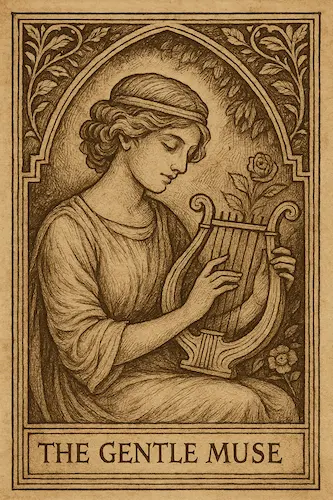
ISFP
The Gentle Muse
EXPLORER GROUP • CARD XIV OF XVI
Guided by emotion, beauty, and personal expression, the Gentle Muse moves through life with quiet creativity — turning feeling, authenticity, and sensitivity into art.
⏱ 6 min read • Updated Jun 2026
Table of Contents
Navigate the chapters below to explore the mindset, strengths, relationships, and hidden symbolism of The Gentle Muse.
Introduction
In the world of personality, the ISFP shines as the Gentle Muse — a presence of serene creativity, quiet compassion, and natural grace. Often misunderstood as reserved or aloof, ISFPs speak in the language of beauty and emotion. They are the silent artists of life, revealing profound meaning not through words but through touch, color, and heartfelt presence. This guide explores the quiet yet powerful journey of the ISFP, touching on their strengths, challenges, relationships, career paths, and timeless essence.
Personality Snapshot: Who Is the Gentle Muse?
ISFPs combine Introverted Feeling (Fi) with Extroverted Sensing (Se) — a unique pairing that grounds deep inner values in vivid, real-world experiences. They are deeply in tune with their moral compass, guided not by logic or structure, but by authenticity and emotional resonance. Though they may appear quiet, ISFPs are passionate defenders of beauty, truth, and kindness.
They are often drawn to nature, animals, and aesthetics, preferring peaceful surroundings that allow their creativity to flow freely. ISFPs thrive when they can express themselves without judgment and connect with others on a soul-deep level — one moment, one act of kindness, one quiet gesture at a time.
Strengths and Weaknesses
Strengths of the ISFP
- Artistic Expression — ISFPs naturally communicate through beauty and detail, whether through music, design, fashion, or the spaces they create.
- Empathy and Sensitivity — They often sense emotional undercurrents in others and respond with warmth, gentleness, and tact.
- Authenticity — ISFPs are deeply true to themselves, refusing to pretend or conform simply for approval.
- Presence in the Moment — They are keenly aware of the present, noticing sights, sounds, feelings, and subtle details others may miss.
Challenges ISFPs Face
- Conflict Avoidance — ISFPs may retreat when faced with confrontation, avoiding necessary but uncomfortable conversations.
- Undervaluing Themselves — Their humble nature can lead them to downplay their talents or avoid the spotlight.
- Difficulty with Long-Term Planning — Their focus on the present moment can make strategic foresight and consistency more challenging.
- Emotional Bottling — When overwhelmed, ISFPs may withdraw and hide their true feelings, even from loved ones.
Romantic Relationships: Love in Quiet Harmony
In romance, ISFPs are loyal, affectionate, and quietly devoted. They seek deep emotional connection, often expressing love through thoughtful actions, creative gifts, or simply being fully present. Words may not come easily, but their love language speaks through sincerity, physical closeness, and shared experiences.
ISFPs are most compatible with partners who respect their independence and emotional sensitivity. They value partners who are gentle, appreciative, and emotionally intelligent — someone who sees their depths and doesn’t pressure them to change. With the right person, the ISFP becomes a nurturing and loyal companion, full of quiet passion.
Friendships: Gentle Connections, Deep Loyalty
Though not social butterflies, ISFPs form strong, meaningful bonds with those they trust. They prefer one-on-one or small group interactions where they can be themselves without performance or pressure. Friends of the Gentle Muse often describe them as peaceful, creative, and deeply loyal.
They dislike gossip or harsh judgment, instead offering a safe space for friends to be vulnerable. While they may disappear occasionally to recharge, ISFPs always return with love and sincerity — offering comfort, beauty, and soulful insight to those they cherish.
Career Paths: Where the Gentle Muse Thrives
ISFPs flourish in careers that blend creativity, independence, and hands-on engagement. Routine or highly-structured environments often feel stifling. Instead, they seek work that aligns with their values and allows for meaningful, sensory-driven expression.
Ideal Career Fields for ISFPs:
Art & Design: Painter, Graphic Designer, Fashion Stylist, Interior Decorator
Healing Professions: Massage Therapist, Physical Therapist, Holistic Healer
Nature-Oriented Roles: Wildlife Photographer, Florist, Landscape Designer
Creative Industries: Actor, Makeup Artist, Artisan Craftsperson, Musician
Service-Oriented Work: Social Worker, Special Education Assistant, Nonprofit Organizer
Workplaces that honor creativity, flexibility, and emotional awareness allow ISFPs to truly shine — especially when they feel their work contributes beauty or healing to the world.
Growth and Life Philosophy
ISFPs may seem carefree, but their journey of growth is profound. At their best, they are quiet revolutionaries — infusing a sometimes harsh world with softness, truth, and artistic vision. Their greatest growth comes from embracing their inner voice while developing the confidence to share it more openly.
Personal Growth Goals for ISFPs:
Learning to speak up in moments of injustice or hurt, rather than staying silent.
Embracing planning tools to bring their dreams into sustained reality.
Acknowledging the depth of their worth and creative gifts.
Practicing emotional expression with trusted allies instead of hiding pain.
The ISFP’s life philosophy is simple yet powerful: Be true to your heart. In their own gentle way, they change lives — not through command or charisma, but through beauty, empathy, and the courage to feel deeply.

— Historical Mirror
William Marshal
c. 1181/1182–1226 • The Gentle Saint
Known for his deep love of nature, simplicity, and compassion, St. Francis of Assisi lived his values through humble action rather than grand display. His peaceful spirit, connection with animals, and devotion to beauty in everyday life reflect the ISFP’s quiet authenticity, sensitivity, and graceful way of expressing what matters most.
The Gentle Muse Across Time
Throughout history, the Gentle Muse archetype appears in poets, healers, and artists who lived in quiet devotion to beauty and truth. While they may not always be in the spotlight, their legacy is found in the way they made others feel — safe, seen, and inspired.
Examples of the Gentle Muse Archetype:
Frida Kahlo: Expressing deep emotion and cultural identity through art.
Mister Rogers: Soft-spoken advocate for emotional intelligence and kindness.
J.R.R. Tolkien: A sensitive and imaginative creator of fantastical worlds rooted in moral truth.
Florence Nightingale: A quiet force of healing and compassion in harsh conditions.
Final Thoughts: Your Legacy as The Gentle Muse
As an ISFP Gentle Muse, your gift is presence. In a world that often values volume and velocity, you offer a sacred alternative — one rooted in sincerity, tenderness, and the magic of the present moment.
Your legacy is not about grand speeches or towering accolades, but about the quiet beauty you leave behind: the art you create, the moments you heal, and the emotions you awaken in others.
By embracing your inner truth and trusting the quiet power of your expression, you become not just a muse, but a living reminder of life’s depth, color, and soul.
You must finish the personality test first — it helps confirm your accurate personality type before continuing with the Zodiac Extension below.
XVII — Zodiac Extension
Unlock Your Zodiac Extension
Your MBTI type is only part of your cosmic identity. Enter your date of birth to discover how your zodiac sign, elemental energy, and constellation influence guide your journey as The Gentle Muse.